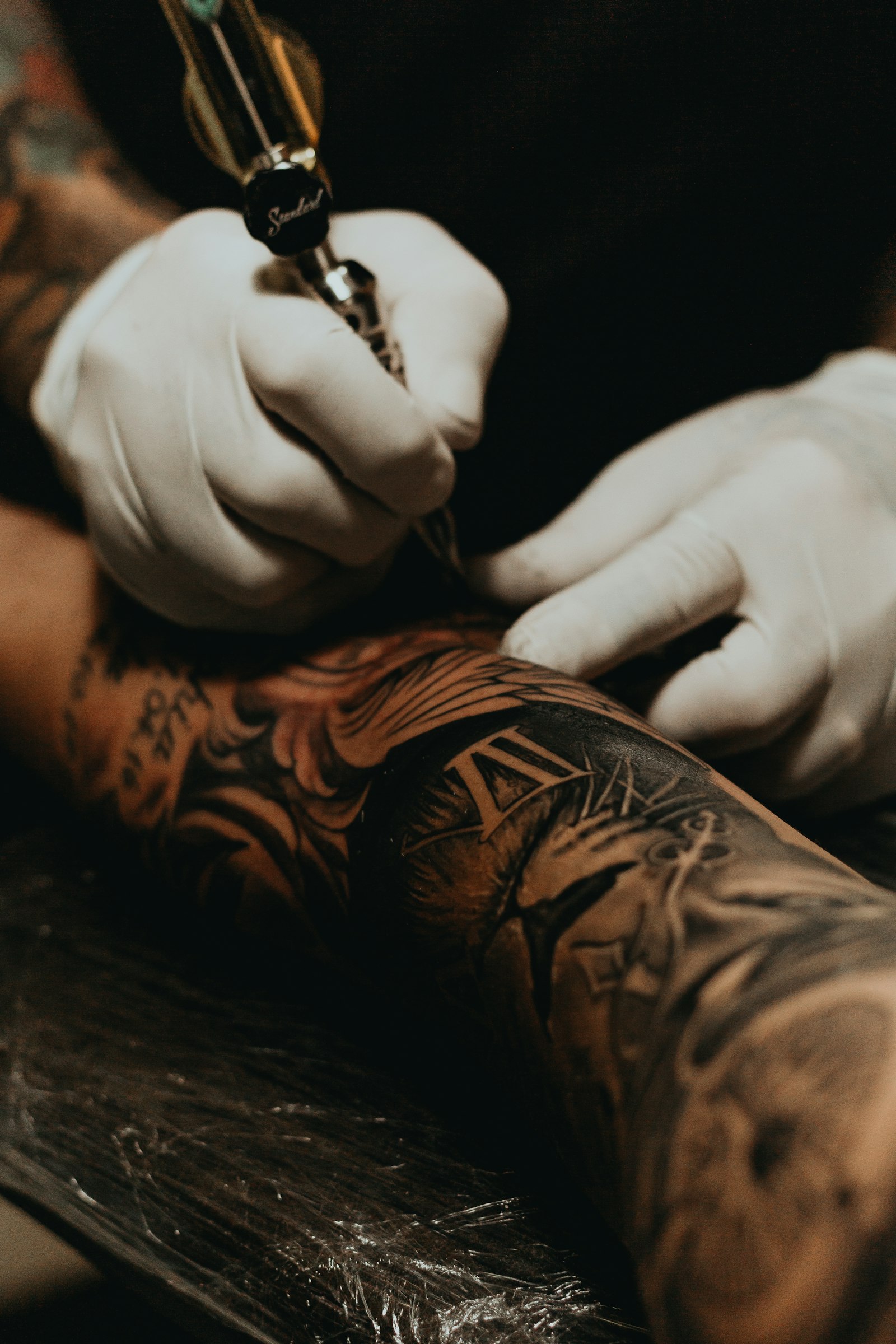
Almost a quarter of people with tattoos wish they didn't have one of them.
The Pew Research Center's 2023 study on American tattoo culture is the most recent large data point and the easiest one to repeat at parties: 32 percent of U.S. adults have a tattoo, and roughly a quarter of those tattooed have at least one they regret (Pew Research Center, "32% of Americans have a tattoo," August 2023). That number is consistent with older surveys, including a 2012 Harris Interactive poll that put the regret rate at about a quarter as well.
Dwell on that for a second. One in four. One in four marriages doesn't end in regret. One in four meals you've eaten this year hasn't disappointed you. One in four jobs hasn't been a mistake. By any reasonable benchmark, a 25 percent regret rate is high. It would be a scandal in any other product category. In tattooing, it has been treated as the cost of doing business.
This essay is for the regretters, the people who have not regretted yet but might, and the people who have looked at the regret rate and decided not to risk it. It argues, simply, that expression should not have to come with a regret rate at all. The fault is not in the people who change their minds. The fault is in a product that does not allow them to.
I. The Trap of Permanence
The deepest assumption built into traditional tattooing is that you, the person getting the tattoo, will be approximately the same person forever.
This is, on inspection, an extraordinary assumption. The person you were at nineteen does not eat the same food, listen to the same music, vote the same way, sleep with the same people, or believe the same things at thirty-two. Your handwriting has changed. Your taste in clothing has changed. The way you sign off an email has changed. The argument that your skin should be the one part of you that is locked into the nineteen-year-old's choices is not, on close reading, a defensible argument. It is a tradition.
Traditions are powerful. They are also movable. The tradition of the unmovable tattoo is a specific historical artefact, a product of a time when tattoo ink technology, removal technology, and the cost of revision were what they were. Today, all three have changed, and the underlying premise is the only thing left.
The trap of permanence is that the cost of changing your mind is so high — money, pain, scarring, several sessions of laser, an outcome that is rarely as good as the original skin — that most people simply do not change it. The tattoo wins. Not because it was right. Because it was harder to undo than to live with.
II. Three People, Three Tattoos, None of Them Permanent Any More
The following are composite portraits, drawn from interviews and conversations across our community. Names and details are changed.
A: A butterfly, age twenty. She got it in her last summer of university, on the inside of her left ankle, because everyone was getting one and because it felt like a marker for the woman she was becoming. By twenty-eight, she had become someone the butterfly did not describe. The butterfly was not wrong; it was simply somebody else's. She told us she had stopped wearing low socks, then stopped wearing dresses that came above the calf, and then realised she was rearranging her wardrobe to hide her own ankle. Removing it cost her three laser sessions and roughly the price of a long-haul flight. The skin underneath, she says, is a slightly different colour from the skin around it. She is, on balance, glad she is rid of it. She is also a person who will not trust a tattoo studio again.
B: A name, age twenty-four. He got it on the inside of his right bicep, in the cursive of a wedding invitation. The marriage ended, amicably enough, three years later. The tattoo did not. He spent the first year after the divorce wearing long sleeves to dinners. He told us he found himself flinching when shaking hands. The name became a small, daily form of trespass. He has not removed it; he has not refreshed it; he has, as he puts it, "learned to share my arm with somebody I no longer talk to."
C: A phase, age nineteen. A friend draws an ornate pattern across the entire upper back. It is, in retrospect, a perfectly competent piece for the year it was done. It has nothing to do with the person who is now thirty-five. There is no trauma here. There is no regret precisely. There is just the quiet fact of carrying somebody else's aesthetic for sixteen years and counting. The piece will be on his back when he is sixty. He says, evenly, that he would prefer it weren't.
None of these three people are unusual. They are, statistically, the regret rate.
III. The Counterargument
The counterargument we make at Sabai is not that people should never tattoo. It is that the lifecycle of a tattoo should match the lifecycle of the feeling.
Some feelings are forever. Most are not. A great love, a deep ritual, a tribute to someone gone — these are arguably permanent. They are also, in our experience, the minority of reasons people get tattoos. The majority of reasons are seasonal. A summer mood. A moment of identity. A trip. A relationship. A phase. The fact that the underlying feeling has a season does not make it less worth wearing. It just means that the wearing should also have a season.
Semi-permanent ink restores that proportion. A tattoo that will fade in a season is the right answer for a feeling that will last a season. A tattoo that lasts longer is, simply, the wrong answer to a question that did not need it.
This is not a smaller argument for tattoos than the traditional one. It is a more honest one. It does not ask the wearer to commit to forever just because the medium does. It invites the wearer to commit only as long as the meaning lasts.
IV. The Quiet Promise
A brand promise should be small enough to keep.
We do not promise our tattoos are forever. We promise the opposite. We promise that anything you wear with us will leave you cleanly, on a schedule that respects how you actually live. We promise that the version of you wearing the tattoo this season will not be punished by the version of you who is reading this in three years. We promise that nothing you put on your skin with us has to follow you for the rest of your life.
The regret rate, in our model, is structurally close to zero. Not because people stop changing — they will — but because the product is designed to change with them.
Expression has no expiry. Only individual expressions do. The skill is knowing the difference.
A semi-permanent tattoo is the simplest tool we have ever made for wearing the difference well.
Wear what fits you this year. Let it leave when it is done. Wear something new.
Sources & References
- Pew Research Center, "32% of Americans have a tattoo, including 22% who have more than one," 15 August 2023. Source
- Harris Interactive, "Tattoo Takeover: Three in Ten Americans Have Tattoos, and Most Don't Stop at Just One," 2012.